
Atovaquone with proguanil, often known by the brand Malarone, and doxycycline are both used to prevent malaria. They have different course lengths, precautions and practical advantages, so the best option depends on the traveller and itinerary.
This comparison cannot determine your prescription. Malaria recommendations vary by exact destination, season and traveller, and neither medicine is suitable for everyone.
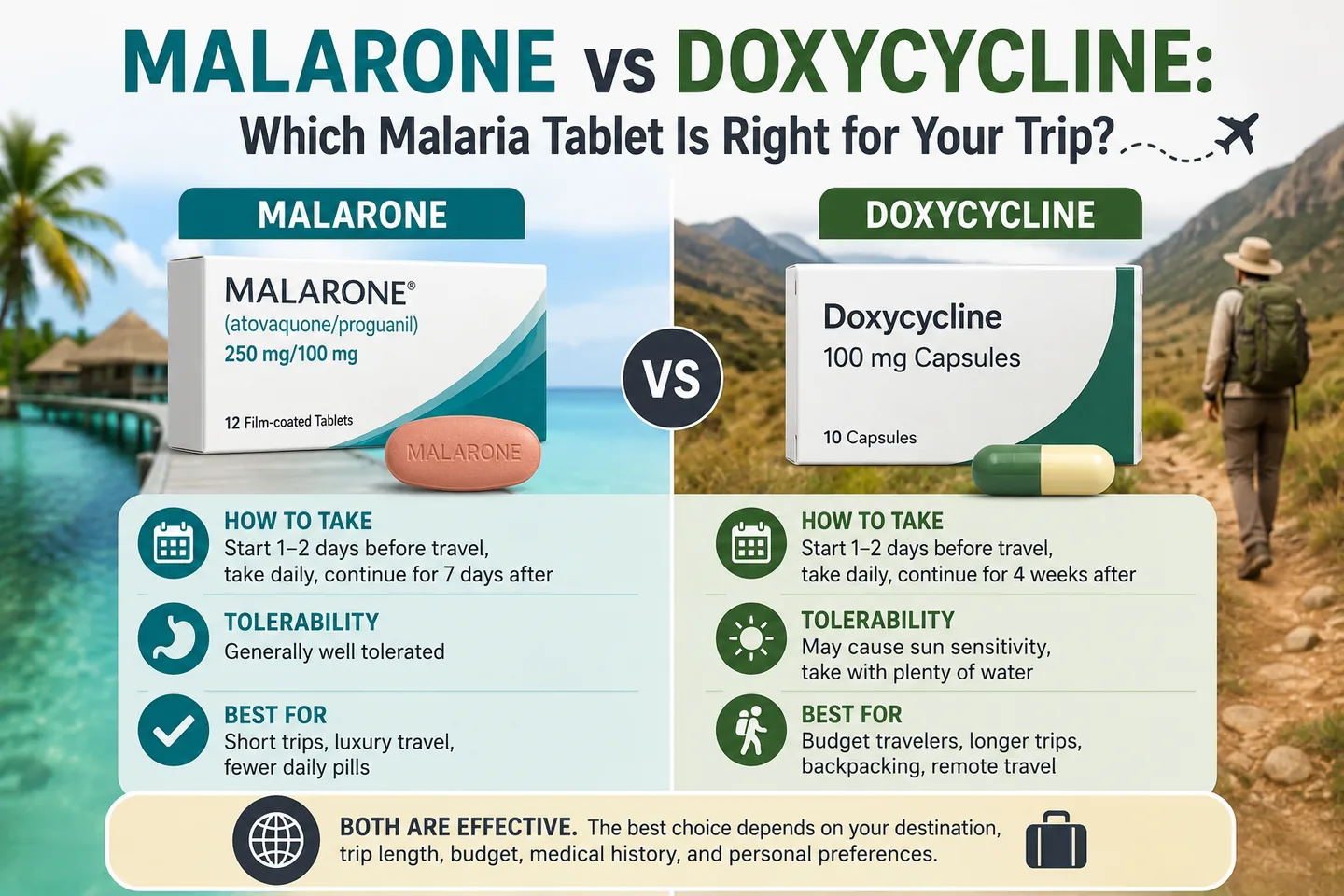
Malarone and doxycycline at a glance
| Consideration | Atovaquone/proguanil | Doxycycline |
|---|---|---|
| Before risk area | Usually 1 to 2 days | Usually 1 to 2 days |
| After leaving | Usually 7 days | Usually 4 weeks |
| Common practical issue | Cost and daily administration with food | Sun sensitivity and a longer post-travel course |
Always follow the instructions for the exact medicine prescribed. A different product, age or weight may require different directions.
Atovaquone with proguanil
The official patient leaflet for atovaquone/proguanil describes starting one to two days before entering a malaria area, taking it daily during exposure and continuing for seven days after leaving.
It should be taken with food or a milky drink where possible. Suitability can be affected by kidney function, age or weight, pregnancy, other medicines and previous reactions.
Doxycycline
The doxycycline patient leaflet describes starting one to two days before travel, taking it daily in the malaria area and continuing for four weeks after return.
Doxycycline can make skin more sensitive to sunlight. It may also irritate the throat or stomach, so administration instructions about water, posture and timing matter. It is unsuitable in some circumstances and interacts with certain medicines and supplements.
Which option is more convenient?
Atovaquone with proguanil has a shorter post-travel course, which some travellers prefer. Doxycycline may cost less for some itineraries but continues for substantially longer after leaving the malaria area.
Convenience and price matter only after clinical suitability and destination effectiveness have been established.
Which is better for a long trip?
The answer depends on total course length, adherence, expected sun exposure, medical history and cost. A longer trip does not automatically make one medicine superior. Calculate the whole course, including tablets needed before entry and after exit, rather than comparing a single-tablet price.
What about side effects?
Both medicines can cause side effects. Atovaquone with proguanil commonly causes gastrointestinal symptoms or headache. Doxycycline may cause gastrointestinal irritation, oesophageal irritation and photosensitivity. Individual leaflets contain the complete warnings and frequency information.
Tell the prescriber about allergies, pregnancy or breastfeeding, kidney or liver problems and every medicine or supplement you take.
Bite avoidance remains essential
No antimalarial is completely protective. Use an appropriate repellent, clothing and mosquito-net or accommodation precautions. Read the NaTHNaC bite avoidance guidance and our practical bite avoidance article.
How Southampton Travel Vaccines selects malaria prevention
Southampton Travel Vaccines’s approach
We review the exact destination and dates, malaria guidance, age or weight where relevant, medical history, allergies, current medicines and previous tolerance before recommending an option.
For a destination-specific recommendation, use our malaria consultation and tablet service in Southampton. You can also view current antimalarial prices or start your assessment.