
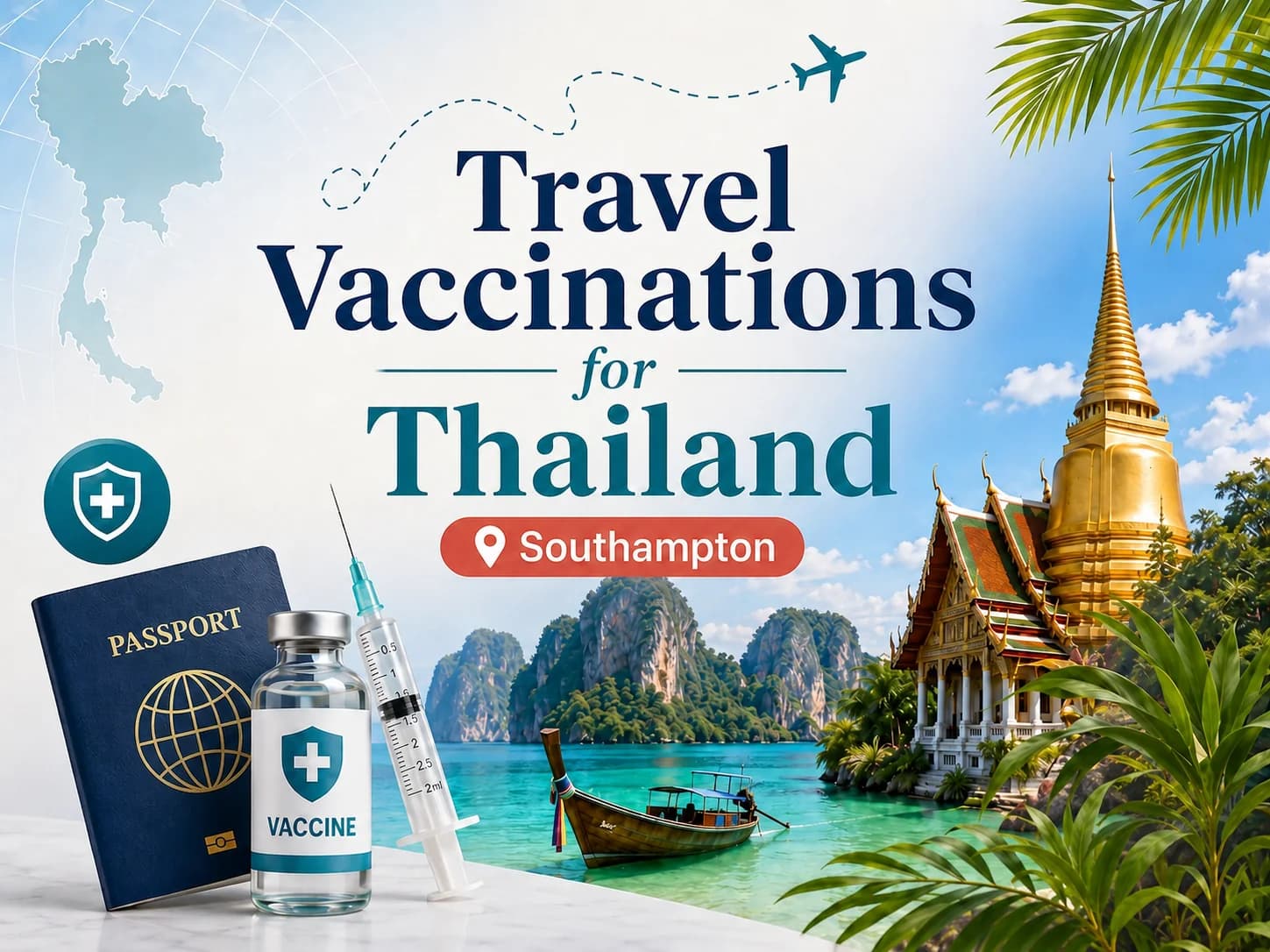
There is no single vaccination list for every trip to Thailand. A short stay in Bangkok and Phuket creates a different risk profile from a month cycling through rural northern Thailand or travelling near the borders with Myanmar, Laos or Cambodia.
Your recommendation should be based on the exact itinerary, duration, accommodation, planned activities, previous vaccines and personal health. For the structured country map, recommendation categories and matched products, use the Thailand destination guide.
Southampton Travel Vaccines’s approach
Complete our travel assessment with every destination and transit. The planner uses your route to organise the relevant vaccine and malaria information, but the displayed recommendations remain subject to clinician review at your appointment.
Vaccines recommended for most travellers
Routine UK vaccinations
All travellers should be up to date with routine vaccination courses and boosters appropriate to their age, medical history and individual risks. This includes checking MMR and diphtheria, tetanus and polio protection.
Hepatitis A
Hepatitis A spreads through contaminated food and water or direct contact with an infectious person. NaTHNaC recommends vaccination for all previously unvaccinated travellers to Thailand because the vaccine is well tolerated and provides long-lasting protection.
Tetanus
Tetanus bacteria can enter through wounds, burns and scratches. Travellers should have completed the UK course. A booster may be advised when medical facilities could be limited and the last tetanus-containing dose was more than ten years ago, even when five previous doses have been recorded.
Bangkok, Phuket and Thailand’s rural border regions do not produce the same recommendation. Your exact stops and activities matter more than the country name alone.
Vaccines considered for some travellers
Typhoid
Typhoid occurs in Thailand but risk is lower where safe food and water are reliably available. Vaccination may be considered for travellers visiting friends and relatives, taking longer or frequent trips, or expecting poorer sanitation and food hygiene.
Hepatitis B
Thailand has an intermediate or high prevalence of hepatitis B. Vaccination can be considered for all travellers and is particularly relevant to longer stays, sexual exposure, contact sports, healthcare work, tattoos or piercings, and circumstances where medical or dental treatment may be needed.
Rabies
Rabies is a risk in Thailand and has been reported in domestic animals. Avoid dogs, monkeys, cats and other mammals, even when they appear healthy or are used to tourists.
Pre-exposure vaccination is particularly relevant to long stays, running or cycling, animal work and travel where rapid access to reliable post-exposure care may be difficult. Vaccination does not remove the need for urgent wound cleaning and medical treatment after a bite, scratch or lick to broken skin.
Japanese encephalitis
Japanese encephalitis occurs countrywide, with year-round risk and seasonal peaks from May to October, especially in northern regions. Risk is generally greater with rural exposure around rice fields, swamps, marshes, pigs and outdoor evening activities.
Vaccination may be considered for stays of a month or more in affected areas, frequent travel, uncertain itineraries or shorter trips involving substantial rural outdoor exposure.
Other selectively considered vaccines
Depending on current outbreaks, previous infection, age and individual exposure, a clinician may also discuss chikungunya, dengue, measles or BCG vaccination. These are not routine additions for every tourist and require a specific risk assessment.
Do you need malaria tablets for Thailand?
Malaria advice is highly location-specific:
- There is a low risk in rural, forested border areas near Cambodia, Laos and Myanmar.
- There is a very low risk in most remaining areas, including Kanchanaburi.
- NaTHNaC reports no malaria risk in Bangkok, Chiang Mai, Chiang Rai, Koh Phangan, Koh Samui and Pattaya.
For most low or very-low-risk itineraries, bite avoidance and awareness are central. Tablets may be considered in exceptional circumstances or for higher-risk travellers. When medication is appropriate for a low-risk area, atovaquone/proguanil or doxycycline may be considered after assessment.
Use our Southampton malaria assessment and read the comparison of atovaquone/proguanil and doxycycline.
Malaria tablets are not routinely needed for every Thailand holiday. The decision depends on the precise area, traveller and type of exposure.
Yellow Fever certificate rules
Yellow Fever does not occur in Thailand, so vaccination is not recommended because of a local disease risk. However, Thailand has an entry certificate requirement for some arrivals.
A certificate is required for travellers aged nine months or over arriving from a country with Yellow Fever transmission risk, including travellers who spent more than 12 hours transiting through an airport in a risk country. The route before Thailand therefore matters.
Read our Yellow Fever certificate guide or book at one of our registered Yellow Fever vaccination centres in Southampton.
Mosquito-borne infections beyond malaria
Dengue, chikungunya and Zika are among the mosquito-borne risks relevant to Thailand. The mosquitoes that spread several of these infections bite mainly during daylight, so precautions should not be limited to bedtime.
Use an effective repellent, wear suitable clothing, choose screened or air-conditioned accommodation where possible and follow our bite-avoidance guidance.
When should you arrange your vaccines?
Ideally arrange advice four to six weeks before departure. This allows time to review records and complete vaccine schedules where more than one dose is needed.
If departure is closer, still seek advice. Some vaccines can provide useful protection after one dose, accelerated schedules may sometimes be available, and immunity can continue developing during the trip. It is usually better to receive appropriate protection late than to miss it without assessment.
Leaving soon does not mean you have missed every opportunity. A late assessment can still identify useful vaccination, certificate and malaria actions before departure.
How the Southampton Travel Vaccines Thailand assessment works
- Select travel health and add Thailand. Include every other country in the trip rather than entering Thailand alone.
- Enter the complete itinerary. Add travel dates, airport transits and their duration, accommodation, rural stays and planned activities. These details affect malaria, rabies, Japanese encephalitis and Yellow Fever certificate advice.
- Review the destination recommendations. The planner displays vaccines and travel medicines connected to the itinerary. These are a starting point for clinical discussion, not a direction to purchase every item shown.
- Complete the health assessment. Record previous vaccinations, allergies, medicines and relevant conditions, including pregnancy, breastfeeding or immune suppression where applicable.
- Sign in or create an account. This keeps the itinerary, health assessment and appointment together.
- Choose an available appointment. Your answers are submitted for clinical review before you attend our Southampton clinic.
- Discuss and receive appropriate treatment. At the appointment we confirm the route, explain the recommendations and only provide vaccines or travel medicines that remain suitable after assessment.
What to have ready
Use the dated itinerary from your airline or travel company and include connecting airports. Upload or bring your vaccination history if available. Missing records should not prevent you from starting the assessment; tell us what is known and bring any evidence you later find.
Food, water and animal precautions
- Use reliable drinking water and take care with food hygiene.
- Wash hands regularly or use alcohol hand gel when appropriate.
- Avoid touching or feeding dogs, cats and monkeys.
- Clean any animal bite or scratch thoroughly and obtain urgent medical help.
- Seek prompt assessment for fever during travel or after returning, and mention the complete itinerary.
Book Thailand travel vaccinations in Southampton
Your assessment and appointment
Southampton Travel Vaccines is at 62 West End Road, Southampton. Complete the online route and health questions first, review the itinerary-led recommendations, then choose the clinic appointment offered in the assessment.
Start your Thailand travel assessment or visit our Southampton travel clinic.
Official sources
Continue exploring
Related reading
Who Should Consider Hepatitis B Vaccination Before Travel?
Understand how medical care, sexual contact, tattoos, work and longer stays can affect hepatitis B risk while travelling.
Read article
Is Japanese Encephalitis Vaccination Needed for My Trip?
Learn how destination, season, trip length, rural stays and evening outdoor exposure determine whether vaccination may be worth considering.
Read article
Do I Need Hepatitis A Vaccination for Travel?
Understand which destinations and travel styles increase hepatitis A risk, when to seek advice and why food and water precautions still matter.
Read article