
A cruise departing from Southampton does not have one standard vaccination list. Recommendations and certificate requirements depend on the complete route, including ports, transits, shore excursions and any flights used to join or leave the ship.
The name of the cruise is not enough for a clinical assessment. Bring the cruise company’s dated itinerary showing every country and port.
Why the complete cruise itinerary matters
NaTHNaC cruise guidance recommends reviewing each country on the itinerary and seeking advice ideally four to six weeks before travel. A short excursion can still create exposure to food, water, insects or animals.
The assessment should include:
- Every port and country in chronological order.
- Flights, airport transits and pre-cruise hotel stays.
- Overnight stops and time spent ashore.
- Rural trips, wildlife visits, trekking and local food plans.
- Your previous vaccinations, medical history and medicines.
Common cruise destinations from Southampton
Popular Southampton itineraries include Mediterranean ports, the Canary Islands and Madeira, northern Europe and the Norwegian fjords, the Caribbean, and longer routes through Africa, Asia or South America. Leaving from Southampton does not determine the recommendations; every port and transit must be checked.
Mediterranean and western Europe
For many standard itineraries, the main priority is ensuring routine UK vaccines are current. Additional advice can change with excursions, medical history, outbreaks and longer stays.
Canary Islands and Madeira
Routine vaccination review is often the starting point. Food safety, sun protection, respiratory illness and individual health planning may be more relevant than specialist travel vaccines for a straightforward itinerary.
Northern Europe, Iceland and the Norwegian fjords
Routine vaccines, seasonal influenza risk, regular medicines and insurance are common priorities. Tick exposure may matter for some rural or outdoor excursions, depending on the route and activity.
Caribbean cruises
Hepatitis A and sometimes other vaccines may be considered according to the islands, food and water exposure and activities. Mosquito-borne risks vary, and Yellow Fever certificate rules can be affected by earlier ports or transits.
Longer Africa, Asia and world cruises
These routes may introduce Yellow Fever, malaria, typhoid, hepatitis A, rabies or other considerations. The sequence of countries can be as important as the final destination because certificate requirements may depend on where the ship has recently called.
Check every country on the TravelHealthPro country pages and submit the complete dated itinerary through our travel health assessment.
Routine and destination-specific vaccines
All travellers should check that routine UK vaccinations are current. Additional recommendations may include hepatitis A, typhoid, tetanus, rabies, Japanese encephalitis or other vaccines depending on the route and activities.
Use the TravelHealthPro country pages for current destination information, then obtain an individual assessment rather than combining country lists yourself.
Yellow Fever and previous ports
Yellow Fever requirements can depend on where you have recently been, not only the port where a certificate is checked. A later country may require proof after the ship has called at a Yellow Fever risk destination.
A first certificate normally becomes valid ten days after vaccination. Read when a Yellow Fever certificate may be required and use our Southampton Yellow Fever centre if assessment indicates vaccination.
Does a cruise passenger need malaria tablets?
Being on a ship does not automatically remove malaria risk. Risk may arise during evening or overnight stays, inland excursions or time before and after the cruise. It depends on the exact area, season and itinerary.
Where tablets are recommended, the choice and course length must match the traveller and route. Continue bite avoidance as well. See our Malarone versus doxycycline guide and malaria assessment service.
Health risks on board
NaTHNaC notes that respiratory and food or water-borne infections can spread rapidly in the semi-enclosed cruise environment. Hand hygiene, cough etiquette and following on-board outbreak instructions remain important.
Passengers should also plan for seasickness, sun exposure, slips and falls, access to regular medicines and suitable travel insurance. Medical treatment on board is not necessarily included in the cruise price.
Shore excursions can change the assessment
A coach tour in a city may create a different risk profile from an overnight safari, rural homestay or jungle walk in the same country. Tell the clinician about animal contact, freshwater exposure, altitude, remote travel and food plans.
How Southampton Travel Vaccines assesses a cruise
Southampton Travel Vaccines’s approach
Our assessment records the full itinerary and relevant health information before your consultation. We review destination vaccines, certificate rules, malaria risk and practical precautions together rather than treating each port as an isolated checklist.
Complete the online assessment or visit our travel clinic near Southampton’s cruise terminals.
Continue exploring
Related reading
Which Travel Vaccinations Are Free on the NHS? A Southampton Guide
Some travel vaccines may be available through your GP, while others are private. Find out where to start, what may be funded and what to do when departure is approaching.
Read article
Last-Minute Travel Vaccinations in Southampton: Is It Too Late?
Travelling soon and still need vaccines or malaria tablets? See what may still be possible and how to arrange a short-notice appointment with Southampton Travel Vaccines in Southampton.
Read article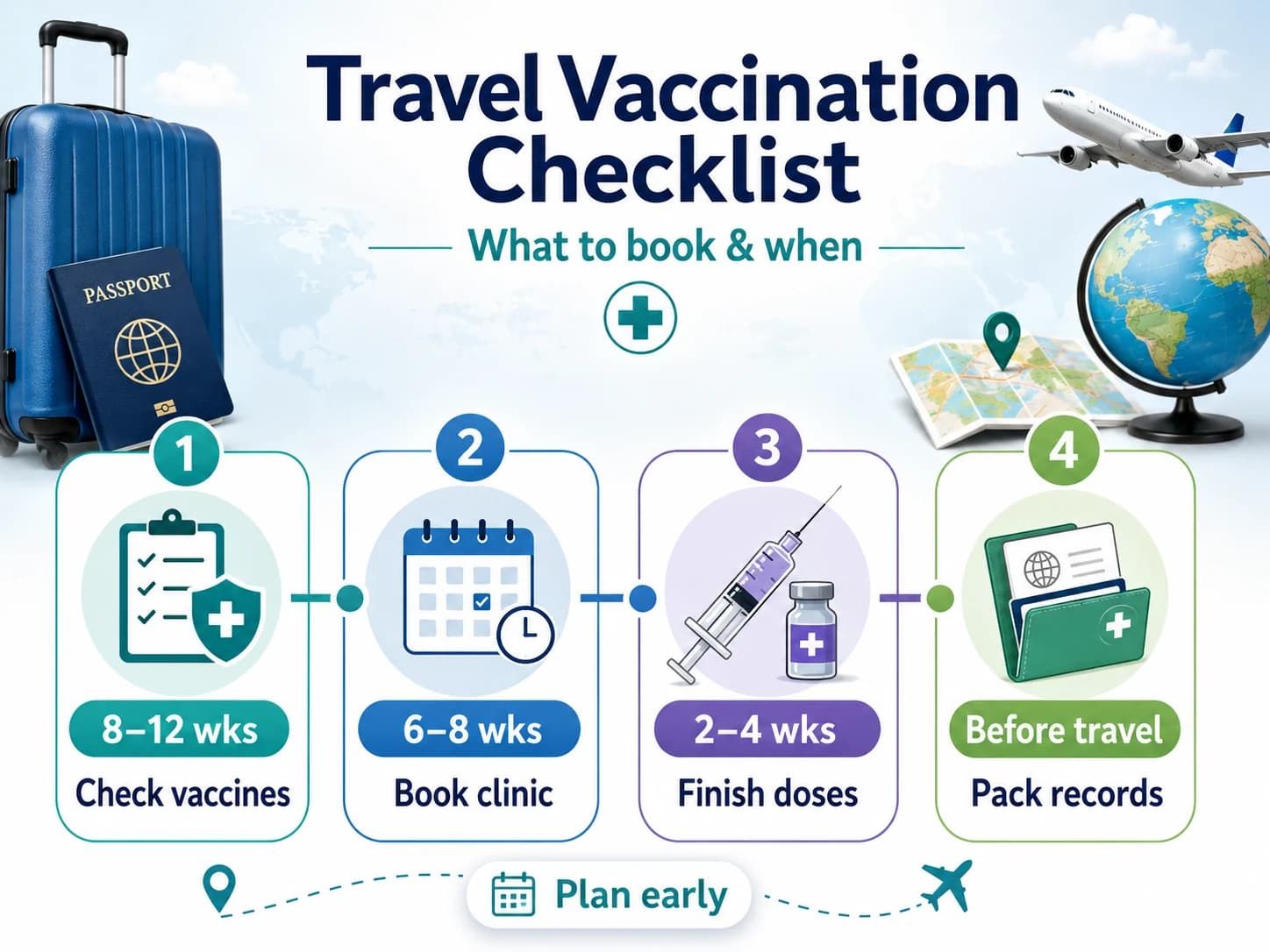
Travel Vaccination Checklist: What to Book and When
Your departure date is approaching, but which vaccines should you book first? Follow this practical timeline to plan important doses, certificates and travel health advice.
Read article