
Some travel vaccinations may be available free through the NHS, while others normally need to be arranged privately. The right starting point depends on your itinerary, previous vaccination history, medical circumstances and how soon you travel.
A vaccine being recommended for a destination does not automatically mean it is funded by the NHS. Equally, needing a private vaccine does not mean every traveller to that country should receive it.
Which travel vaccines are free on the NHS?
The current NHS travel vaccination guidance lists the following vaccines as available free through GP travel services after a risk assessment:
- Hepatitis A.
- Typhoid fever.
- Cholera.
- Polio, normally provided within the combined tetanus, diphtheria and polio vaccine.
These four vaccinations are included in General Medical Services. The BMA’s guidance on the GMS travel vaccination requirements states that they must be given as NHS provision, without charging an eligible registered patient, when the contractual circumstances are met.
The underlying 2026 General Medical Services Statement of Financial Entitlements includes a specific section for vaccines and immunisations required for foreign travel. This is different from optional private travel services.
Clinical eligibility still depends on the destination, exposure risk and vaccination history. The contractual requirement does not mean every traveller needs all four vaccines, every recommended vaccine is free or an appointment must be available immediately. A surgery still needs time to assess the travel form, review records, arrange stock and provide the service safely.
What do the four NHS travel vaccines protect against?
Hepatitis A
Hepatitis A is a viral liver infection usually spread through food or water contaminated with infected faeces. Symptoms can include fever, tiredness, nausea, upper abdominal pain, dark urine, pale stools, itching and jaundice. Some people, particularly children, may have mild symptoms or none.
Typhoid fever
Typhoid is a bacterial infection spread through contaminated food or water. It may cause a persistent or worsening fever, headache, tiredness, cough, abdominal pain, constipation or diarrhoea and sometimes a faint pink rash. Untreated infection can cause serious complications, so illness after travel needs prompt assessment.
Cholera
Cholera is acquired from contaminated food or water and can cause profuse watery diarrhoea, vomiting, abdominal discomfort and rapid dehydration. Most ordinary tourists do not need cholera vaccination; it is more often considered for particular high-risk settings, remote travel or aid work.
Polio
Most polio infections cause no symptoms. Others cause a flu-like illness with fever, fatigue, headache, vomiting, neck stiffness or muscle pain. Rarely, the infection affects the nervous system and causes paralysis or breathing difficulty. Travel protection is usually given using the combined tetanus, diphtheria and polio vaccine.
Vaccination reduces risk but does not replace food, water and hand-hygiene precautions. Seek medical advice after travel if symptoms are concerning and always mention the complete travel history.
Which travel vaccines are usually private?
The NHS identifies vaccines including hepatitis B, Japanese encephalitis, rabies, tick-borne encephalitis and Yellow Fever as vaccines travellers normally pay for. Meningitis ACWY may also be required for particular journeys, including qualifying Hajj and Umrah travel, but travel provision is generally private.
Yellow Fever can only be provided by a designated centre. We provide Yellow Fever vaccination and the official certificate through our registered Yellow Fever vaccination centres, following an individual clinical assessment. Read our Yellow Fever vaccination service in Southampton.
Why GP travel services differ
Individual practices organise delivery differently. Some have a dedicated travel clinic while others concentrate on the vaccinations included in GMS and direct patients elsewhere for non-NHS vaccines, malaria tablets or more complex private travel advice. Appointment lead times, stock and the time needed to assess an itinerary also vary.
Contact your GP early and ask what its process and timescale are. Do not assume that submitting a form means an appointment has been reserved.
Can a GP prescribe malaria tablets?
Yes, a GP can assess malaria risk and may issue a private prescription where a prescription-only antimalarial is appropriate. However, malaria prophylaxis required solely for travel should not be issued on an NHS prescription. The traveller normally pays any private prescription fee and the cost of the medicine.
The BNSSG ICB position statement on travel vaccines and malaria prophylaxis explains that GPs may supply suitable malaria medicines privately or issue a private prescription. In practice, many surgeries have a policy not to provide private malaria services and instead direct travellers to a pharmacy or private travel clinic.
Some antimalarials can also be supplied through an appropriately authorised pharmacy service. The NHS malaria guidance advises travellers to seek advice from a GP, nurse, pharmacist or travel clinic. Medicine choice depends on the exact destination, dates, traveller and medical history.
Southampton Travel Vaccines provides destination-based assessment and private malaria prevention through our malaria consultation and tablet service in Southampton. You can also compare Malarone and doxycycline.
Should I see my GP or a private travel clinic first?
If there is enough time, checking your GP service may reduce the amount you need to pay. A private clinic may be useful when:
- You need vaccines not routinely funded by the NHS.
- Your GP does not provide a travel service or cannot see you before departure.
- Your itinerary requires Yellow Fever assessment or certification.
- You need antimalarial tablets or a coordinated review of several destinations.
- You want one assessment covering vaccines, malaria and practical travel risks.
How Southampton Travel Vaccines handles the assessment
Southampton Travel Vaccines’s approach
Complete our online travel assessment before attending. It collects your complete itinerary, transit countries, dates, previous vaccinations, medical history, medicines, allergies and planned activities for clinician review.
We distinguish between vaccines you may be able to obtain through the NHS and private options relevant to your trip. View our current travel vaccine prices or visit our Southampton travel clinic.
What if I do not have my vaccine records?
Check the NHS App and ask your GP surgery for your vaccination history. Bring any paper records or previous International Certificates of Vaccination or Prophylaxis. If records cannot be obtained in time, still complete an assessment; the clinician can explain what can be established and what further information may be needed.
What if I am travelling soon?
Do not abandon the process. NaTHNaC advises that a last-minute appointment is still valuable, because some vaccines and malaria tablets can be provided close to departure. Read our guide to last-minute travel vaccinations in Southampton.
Continue exploring
Related reading
Last-Minute Travel Vaccinations in Southampton: Is It Too Late?
Travelling soon and still need vaccines or malaria tablets? See what may still be possible and how to arrange a short-notice appointment with Southampton Travel Vaccines in Southampton.
Read article
Do I Need Vaccinations for a Cruise from Southampton?
Your cruise leaves Southampton, but your health requirements come from the whole route. Learn how ports, transits, excursions and personal health shape the advice.
Read article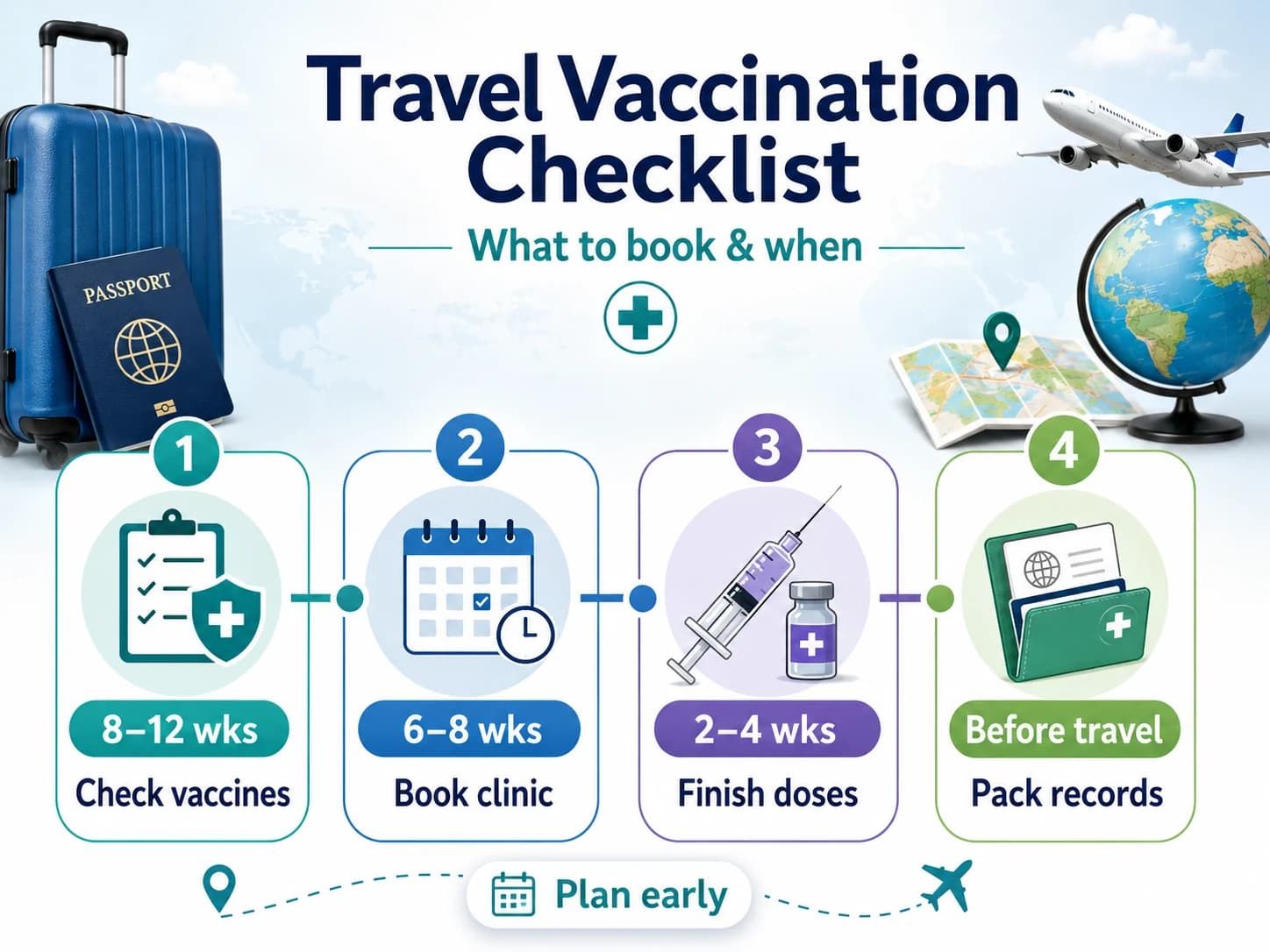
Travel Vaccination Checklist: What to Book and When
Your departure date is approaching, but which vaccines should you book first? Follow this practical timeline to plan important doses, certificates and travel health advice.
Read article