
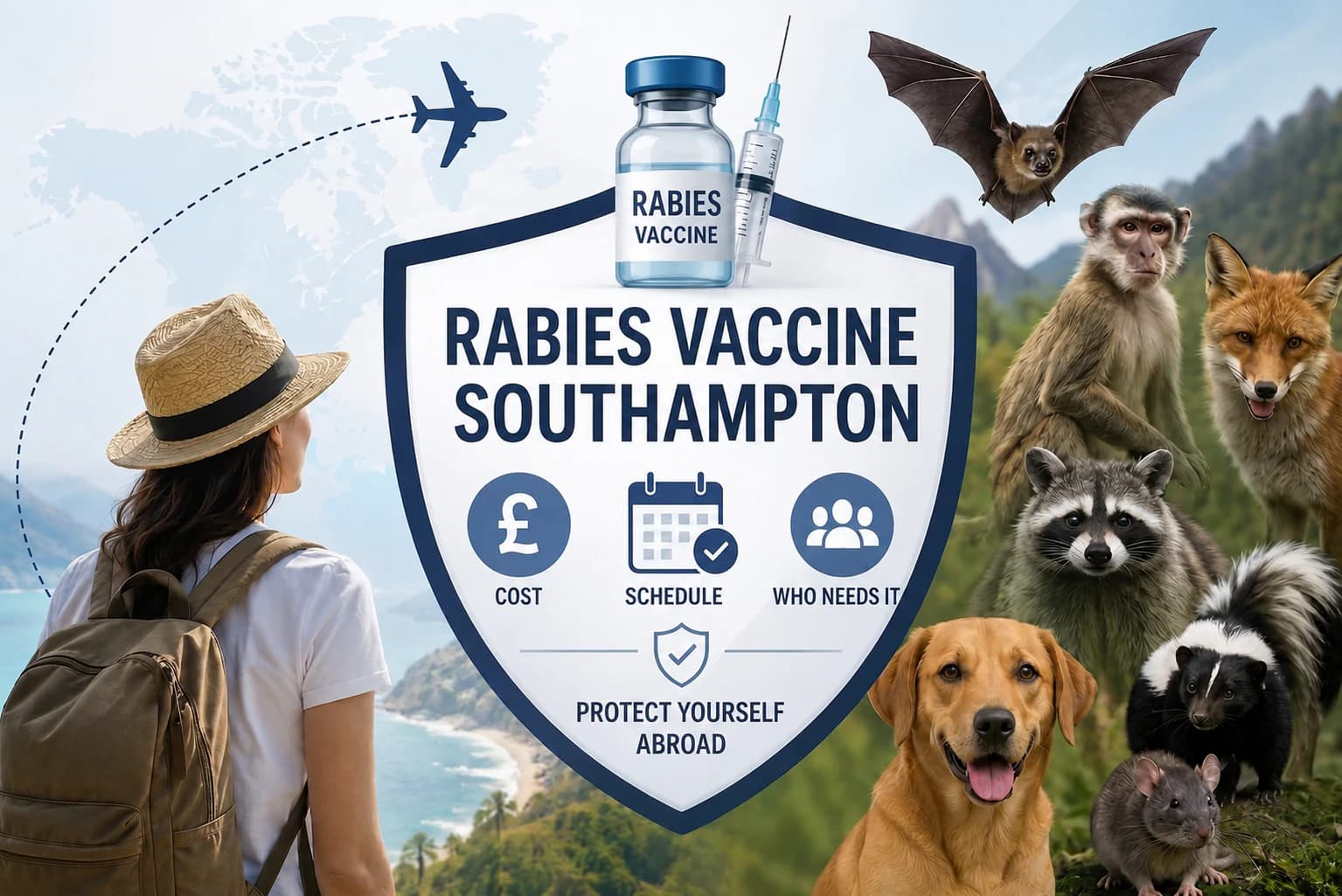
Rabies is uncommon in UK travellers, but it is almost always fatal once symptoms begin. Pre-travel vaccination may be appropriate if your itinerary creates a meaningful risk of animal exposure or prompt, reliable treatment could be difficult to obtain.
This guide focuses on animal exposure, remoteness and access to urgent treatment. For current intramuscular options, prices and dose schedules, see the rabies vaccine service page.
Bitten, scratched or licked on broken skin by an animal? Immediately wash and flush the area thoroughly with soap and plenty of water, then seek urgent medical care locally. Do not wait until you return to Southampton, even if you received rabies vaccination before travel.
What is rabies?
Rabies is a viral infection of the brain and nervous system. It is usually passed through saliva following a bite or scratch, although saliva contacting broken skin, the eyes, nose or mouth can also create an exposure.
UKHSA advises travellers that rabies is found around the world, particularly in Asia, Africa and parts of Central and South America. Dogs cause most human infections, but cats, monkeys, bats and other mammals can also transmit the virus.
Who should consider a rabies vaccine before travel?
Vaccination is not automatically required for every visitor to a country where rabies occurs. It is more likely to be considered when:
- You will stay for a prolonged period in a country where rabies is present.
- You are visiting rural or remote areas with limited access to medical care.
- Your activities increase animal contact, including cycling, running, caving or working outdoors.
- You will work with animals, wildlife or in veterinary settings.
- You are travelling with children who may approach animals or not report a small bite.
- Your destination may have limited access to reliable vaccine or rabies immunoglobulin.
Backpackers, volunteers, long-stay travellers and people visiting friends and relatives may have different risks from travellers staying briefly in urban hotels.
Which destinations carry a rabies risk?
Risk is not uniform within a continent or even within one country. Check every destination using the current TravelHealthPro country pages, including side trips and border crossings.
Our destination guides cover animal exposure alongside other travel risks:
- Thailand travel vaccines from Southampton.
- India travel vaccines from Southampton.
- Kenya travel vaccines from Southampton.
Our rabies vaccine products
We offer both Verorab and Rabipur for pre-travel rabies vaccination. A clinician will recommend the appropriate product and schedule after considering your departure date, immune status, previous doses and individual suitability.
Pre-exposure schedules: Verorab and Rabipur
Both are inactivated cell-culture rabies vaccines, but they are produced differently and their licensed administration options are not identical. The schedule selected must follow the product information, current UK guidance and an individual assessment.
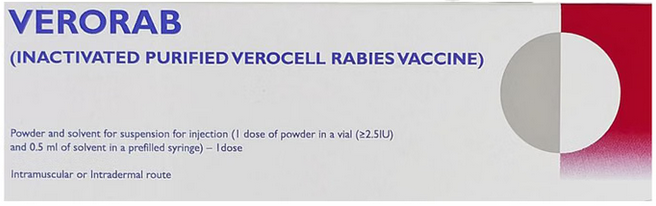
Verorab
Two-dose IMSuitable immunocompetent travellers.

Three-dose IMWhen a shortened course is unsuitable.
Licensed IDDose-sparing, clinician-administered option.
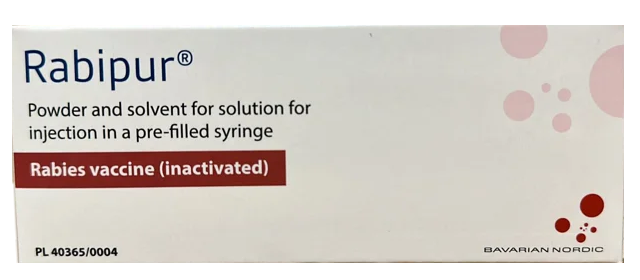
Rabipur
Two-dose IMSuitable immunocompetent travellers.
Conventional IMWhen a shortened course is unsuitable.
Rapid IMEligible adults aged 18–65 travelling soon.
Rabipur is licensed in the UK for intramuscular administration. Intradermal use is outside its UK product licence.
The Verorab product information states that its two-dose one-week schedules should not be used in immunocompromised people. The Rabipur product information requires extra specialist consideration and antibody testing if its two-dose or rapid option is used in an immunocompromised person.
Post-exposure schedules after a bite, scratch or lick
Post-exposure treatment is different from pre-travel vaccination and must start as soon as possible after a potential exposure. Immediately wash and flush the area thoroughly with soap and plenty of water, then obtain urgent medical care locally. The correct course depends on the exposure, previous rabies vaccination, immune status and a formal risk assessment.
Not fully immunisedFour-dose UK schedule.
Previously fully immunisedTwo vaccine doses.
ImmunosuppressedSpecialist five-dose schedule.
Human rabies immunoglobulin may also be required, particularly for higher-risk exposure in someone who is not fully immunised. It is not a substitute for vaccine and its use must follow the current UKHSA risk assessment. These timelines summarise current UK schedules; treatment should be prescribed by the clinicians managing the exposure rather than self-scheduled.
See the current UKHSA rabies risk assessment and treatment summary.
Intramuscular versus intradermal vaccination
Intramuscular (IM) vaccination places the vaccine into the deltoid muscle in older children and adults, or the anterolateral thigh in younger children. It uses a full product dose at each visit. IM administration is the preferred route in current UK travel-health guidance and is less dependent on the specialised technique required for intradermal injection.
Intradermal (ID) vaccination places a smaller volume into the dermis, usually in the upper arm or forearm. It is dose-sparing but must raise a proper intradermal bleb; if the full dose is not deposited correctly, the response may be unreliable. It should only be delivered by a clinician trained and experienced in this technique.
Intradermal administration does not mean weaker protection when an appropriate licensed or officially supported schedule is administered correctly. In Verorab studies, 98.6% of participants receiving the one-week IM schedule and 97.2% receiving the licensed two-site ID schedule reached the accepted antibody threshold by day 21; another supportive ID study reported 99.1%. These were not direct comparative efficacy trials, so the figures should not be used to claim that one route is superior.
TravelHealthPro states that IM is preferred, ID is technique-dependent, Verorab has a licensed ID option, and ID administration of Rabipur is outside its UK licence. The appropriate route also depends on immune status, medicines and local service arrangements.
Bring records of previous rabies vaccination. A documented earlier course can change both pre-travel advice and treatment following a future exposure.
How early should I book?
Arrange an assessment as early as possible. The NHS recommends seeking advice at least eight weeks before travel when possible, allowing time to review the itinerary and complete other vaccine courses.
If you leave sooner, do not assume it is too late. A shorter licensed schedule may suit some travellers. Read our guide to last-minute travel vaccinations in Southampton.
How much does rabies vaccination cost in Southampton?
Pre-travel rabies vaccination is normally private. The overall cost depends on the clinically appropriate schedule and number of doses required.
Southampton Travel Vaccines keeps live per-dose and course prices on the travel vaccine prices page. Check that page rather than relying on an older price quoted in an article or search result.
The cost should be considered alongside the consequences of needing treatment remotely. Rabies immunoglobulin can be difficult to obtain in some countries, and finding appropriate care may substantially interrupt travel.
Is the rabies vaccine available on the NHS?
Rabies vaccination for an ordinary holiday is not routinely NHS funded and is commonly obtained privately. NHS provision may apply in particular occupational circumstances. Treatment following a possible exposure is managed separately as an urgent clinical and public-health matter.
Read which travel vaccinations are available through the NHS for a broader comparison.
What protection does pre-travel vaccination provide?
Pre-travel vaccination prepares the immune system and usually simplifies treatment after an exposure. It can reduce the number of post-exposure vaccine doses and, in most circumstances, avoid the need for rabies immunoglobulin.
It does not mean a bite or scratch can be ignored. TravelHealthPro confirms that post-exposure treatment is still required, including for previously vaccinated travellers.
What should I do after an animal bite or scratch abroad?
- Wash immediately. Thoroughly flush the wound or exposed area with soap and plenty of water.
- Apply a suitable disinfectant if available.
- Seek medical care without delay. Do not wait for symptoms or your return to the UK.
- Show your vaccination record and retain details of treatment given abroad.
- Contact your GP on return. Further assessment or treatment may be required.
UKHSA guidance confirms that prompt post-exposure treatment is highly effective when given correctly.
How to reduce animal exposure
- Do not touch or feed dogs, cats, monkeys or other mammals.
- Avoid animal contact at temples, sanctuaries, markets and tourist attractions.
- Supervise children and teach them to report every bite, scratch or lick.
- Do not handle bats; a possible bat exposure needs urgent advice.
- Do not assume that a healthy-looking animal is risk free.
Book a rabies vaccine in Southampton
Southampton Travel Vaccines’s approach
Start with our online travel health assessment. Include every destination, date, accommodation type, planned activity, previous rabies dose, health condition, medicine and allergy.
A clinician will assess whether vaccination is appropriate, explain the schedule and coordinate it with other vaccines or malaria prevention. Vaccination is provided face to face at our Southampton travel clinic in Bitterne.
Review current prices before proceeding. If departure is close, enter the correct date so the available options can be assessed safely.
Continue exploring
Related reading
Who Should Consider Hepatitis B Vaccination Before Travel?
Understand how medical care, sexual contact, tattoos, work and longer stays can affect hepatitis B risk while travelling.
Read article
Is Japanese Encephalitis Vaccination Needed for My Trip?
Learn how destination, season, trip length, rural stays and evening outdoor exposure determine whether vaccination may be worth considering.
Read article
Do I Need Hepatitis A Vaccination for Travel?
Understand which destinations and travel styles increase hepatitis A risk, when to seek advice and why food and water precautions still matter.
Read article